There’s a quiet kind of madness in collecting hobbies. Not the kind where you try yoga one week and painting the next-no, this is deeper. It’s when someone doesn’t just enjoy something, they consume it. Live it. Breathe it. And then move on to the next thing like it’s a collectible card they just pulled from a pack. Kane Fawkes calls them ‘hobby whores.’ He’s not being cruel. He’s being honest.
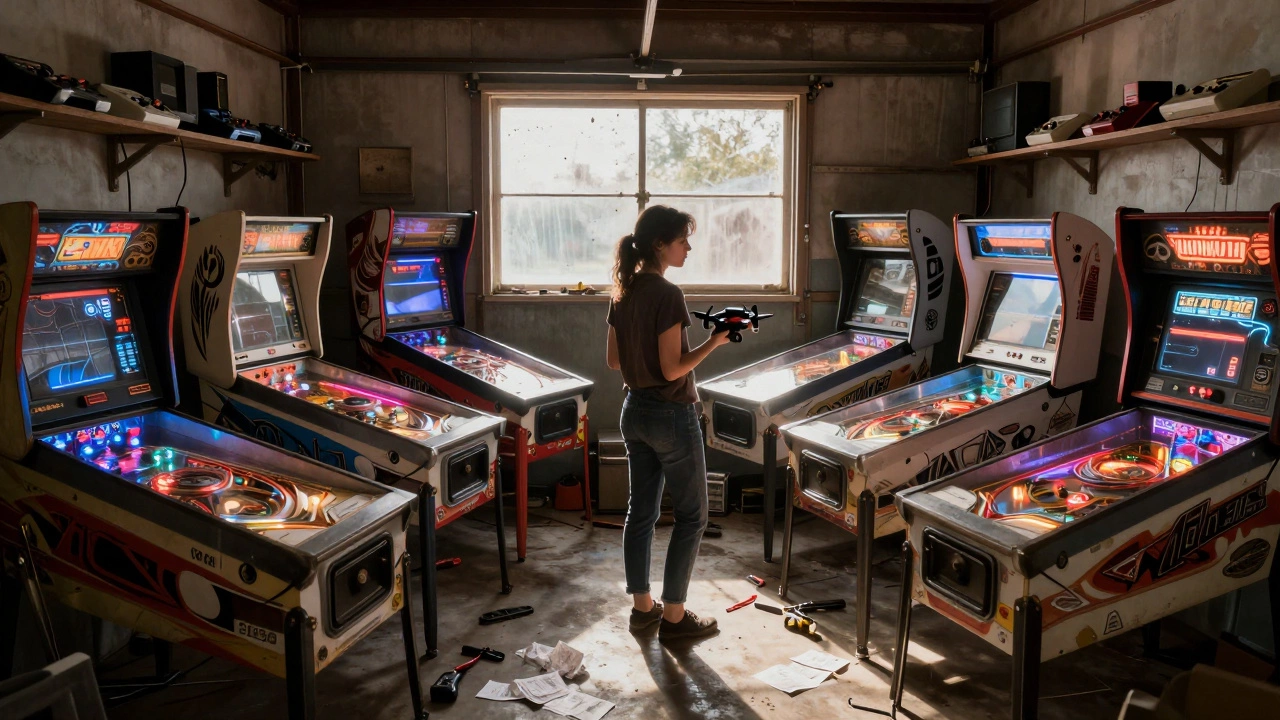
He met one last year at a vintage synth fair in Bristol. She had five different pinball machines in her garage, each restored to factory specs, and a full set of rare Japanese arcade controllers she’d flown in from Tokyo. She told him she’d spent £18,000 on them in 14 months. Then she said, ‘I’m done with pinball. I’m starting drone racing next month.’ That’s when Kane knew. This wasn’t passion. This was compulsion. And it’s more common than you think. Some people chase novelty like others chase love. One of the most bizarre examples I’ve seen? A woman who hired an escort london vip just to celebrate finishing her 12th pottery course. She said she needed someone who ‘understood the pressure of perfection.’
What Does ‘Hobby Whore’ Really Mean?
The term isn’t about sex. It’s about intensity. A hobby whore doesn’t just dabble-they go all in. They buy the top-tier gear, take the expensive classes, join the exclusive clubs, and then, when the thrill fades, they sell it all on eBay and start over. It’s not hoarding. It’s cycling. And it’s not always harmless.
Kane has tracked over 80 people in his network who fit this pattern. Most are between 28 and 45. Many have stable jobs. Some are doctors, engineers, teachers. They don’t do it to show off. They do it because the rush of starting something new feels like the only thing that makes them feel alive. The problem? The high lasts three to six weeks. Then comes the crash. The guilt. The pile of unused equipment. The unanswered messages from the online community they swore they’d be active in.
The Psychology Behind the Chase
Neuroscientists call this ‘novelty addiction.’ Every time you start something new-whether it’s learning the ukulele, building a model train layout, or training for a triathlon-your brain releases dopamine. It’s the same chemical that fires when you eat chocolate or win a game. But when you do it over and over, your brain starts needing bigger, faster, louder hits to feel the same rush.
Studies from the University of Cambridge show that people who cycle through hobbies at a rate of more than three per year are twice as likely to report feeling ‘empty’ or ‘unfulfilled’ compared to those who stick with one or two long-term interests. It’s not that they’re lazy. It’s that their brain has learned to associate happiness with change, not depth.
Kane saw this in his own life. He spent two years mastering the art of bonsai. He read every book, flew to Japan to train under a master, even bought a $4,000 tree. After 18 months, he woke up one morning and realized he didn’t care anymore. He gave the tree to a neighbor. He didn’t feel sad. He felt… relieved.
Why Do People Do This?
It’s rarely about the hobby. It’s about what the hobby represents.
For some, it’s control. In a world where work, relationships, and social media feel unpredictable, picking up a new skill gives you the illusion of mastery. You can measure progress: ‘I’ve done 10 sessions,’ ‘I bought the right tool,’ ‘I joined the group.’ It’s tangible. It’s safe.
For others, it’s identity. ‘I’m a photographer.’ ‘I’m a woodworker.’ ‘I’m a runner.’ But when you tie your self-worth to a hobby, you’re setting yourself up for a fall. When the interest dies, who are you? That’s the question that keeps people chasing the next thing.
One woman Kane interviewed had gone through six different fitness regimes in three years-yoga, CrossFit, pole dancing, kettlebell training, martial arts, and aerial silks. She told him, ‘I don’t feel real unless I’m training for something.’
The Cost-Financial, Emotional, Social
The money adds up fast. One hobby whore Kane knows spent £27,000 in 18 months on glassblowing equipment, classes, travel to workshops, and studio rentals. Then she quit. The gear sits in storage. She now works part-time at a coffee shop and says she’s ‘trying to be normal.’
Relationships suffer too. Partners get tired of being the fifth wheel to a new obsession. Friends stop inviting you to things because you’re always ‘in the middle of something.’ Families stop asking what you’re up to because they already know the answer: ‘Something new.’
And then there’s the loneliness. The people you meet in these hobby circles? They’re usually just as transient as you are. You bond over shared passion-but when you move on, so do they. There’s no real community. Just a string of temporary connections.
Is There a Way Out?
Kane says yes. But it’s not about quitting. It’s about changing the game.
He helped one woman shift from collecting hobbies to deepening one. She’d done seven different writing courses-poetry, screenwriting, memoir, journalism, fiction, blogging, copywriting. She was exhausted. Kane asked her: ‘What’s the one thing you’ve written that made you cry?’ She said, ‘A letter to my dad after he died.’
That became her focus. Not ‘being a writer.’ Just writing. One letter. One story. One memory at a time. She didn’t need a new hobby. She needed to stop running.
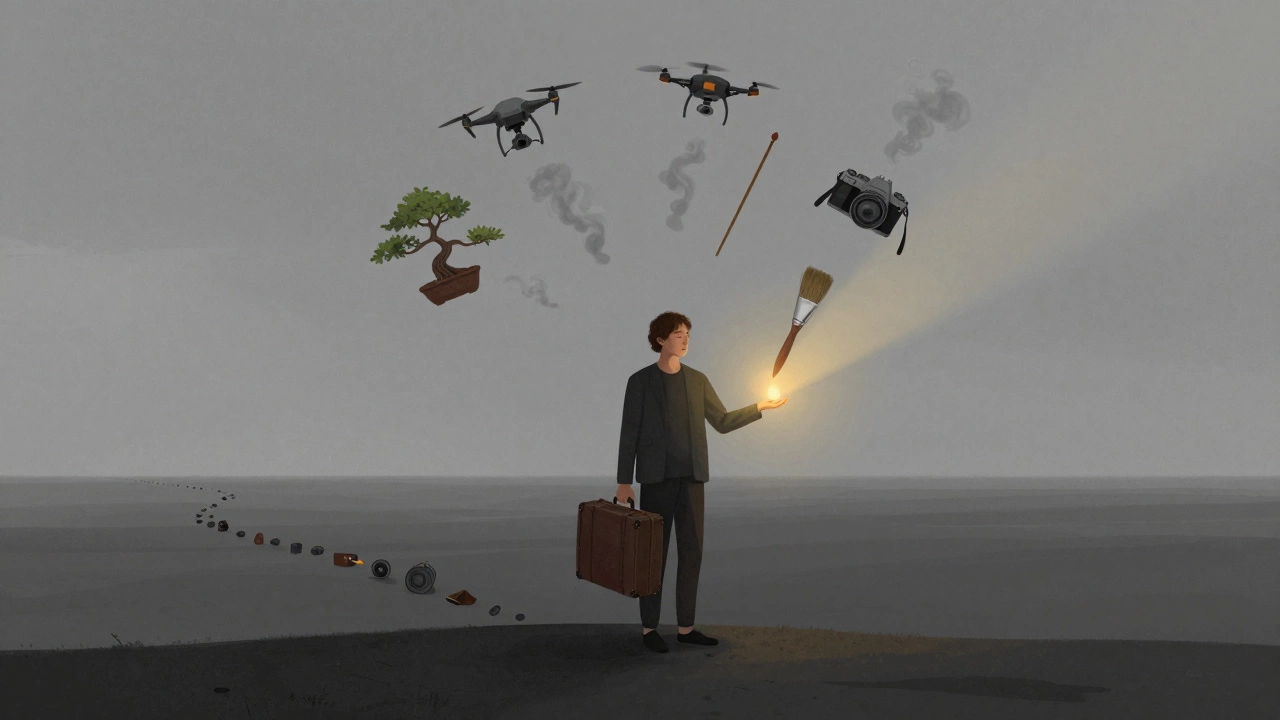
Another man started keeping a ‘hobby graveyard’ journal. Every time he quit something, he wrote down: what he loved, what he hated, what he learned, and what he missed. After six entries, he noticed a pattern: he missed the quiet. The alone time. The lack of pressure. He started taking daily walks with no goal, no camera, no playlist. Just walking. He says it’s the first thing in years that hasn’t felt like a project.
The Quiet Alternative
Not everyone who collects hobbies is broken. Some are just bored. Or lonely. Or stuck. The real problem isn’t the hobby. It’s the silence that follows it.
There’s a difference between someone who loves woodworking and someone who buys a $3,000 lathe, joins five Facebook groups, posts daily updates, and then abandons it after two months. One is living. The other is performing.
Kane now runs a small group in Perth called ‘The Unfinished.’ It’s not a club. It’s not a course. It’s just people who show up once a month and say: ‘I quit something this week. Here’s why.’ No advice. No judgment. Just honesty.
One member said, ‘I stopped collecting vintage cameras. I realized I was using them to avoid taking pictures of my daughter.’ Another: ‘I gave up my 12th knitting project. I didn’t want to make scarves anymore. I wanted to feel my kids’ hands.’
When the Next Thing Isn’t the Answer
There’s a moment in every hobby whore’s journey when they realize: the next thing won’t fix this. The new gear won’t fill the hole. The new class won’t make them feel whole.
That moment isn’t a failure. It’s a turning point.
Kane doesn’t tell people to stop. He tells them to pause. To sit with the emptiness. To ask: ‘What am I really trying to escape?’
Because sometimes, the thing you’re running from isn’t boredom.
It’s yourself.
One woman told him, ‘I think I was trying to become someone else. Someone who didn’t feel so… ordinary.’
She’s still here. Still quiet. Still not doing anything ‘big.’ But she’s smiling more. And she hasn’t bought anything new in eight months.
That’s progress.
And sometimes, that’s all you need.
There’s a quiet kind of courage in stopping. In not chasing. In letting something just be.
Maybe that’s the real hobby.
Being here.
Now.
And not needing the next thing to prove you’re worth it.
 Cricket