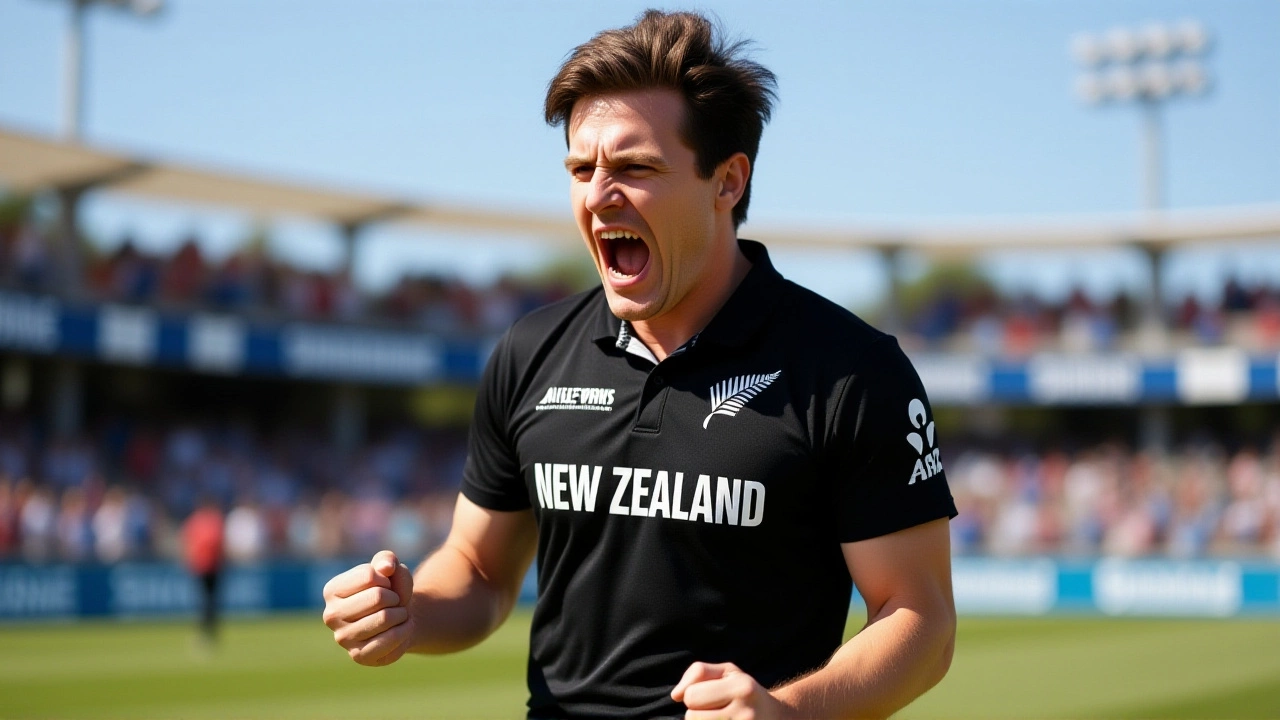
When Matt Henry collapsed to his knees in tears after landing awkwardly on his shoulder during a diving catch in the semi-final, few could have guessed it would cost New Zealand their most dangerous weapon in the ICC Champions Trophy 2025 FinalDubai International Cricket Stadium. The 33-year-old pace spearhead, who had taken exactly 10 wickets at an average of 16.70 — the most in the tournament — won’t take the field against India on Sunday, March 9, 2025. His absence isn’t just a tactical blow; it’s a gut punch to a team that’s come within one match of glory twice before, and now finds itself without its most consistent match-winner.
The Injury That Changed Everything
It happened in the 29th over of South Africa’s chase at Gaddafi Stadium in Lahore on March 5. Henry lunged full-length to his right to snare a skier at point, landed hard on the point of his right shoulder, and immediately winced. He didn’t leave the field. In fact, he bowled two more overs — 4.1 and 4.2 — before completing the 50-run win. But the pain lingered. By the morning of the final, scans confirmed a significant soft tissue strain. He failed his fitness test. New Zealand captain Mitchell Santner confirmed the news at the toss, visibly somber. "We gave him every chance," Santner said. "He’s a warrior. But the shoulder’s too sore to risk. We’re gutted."
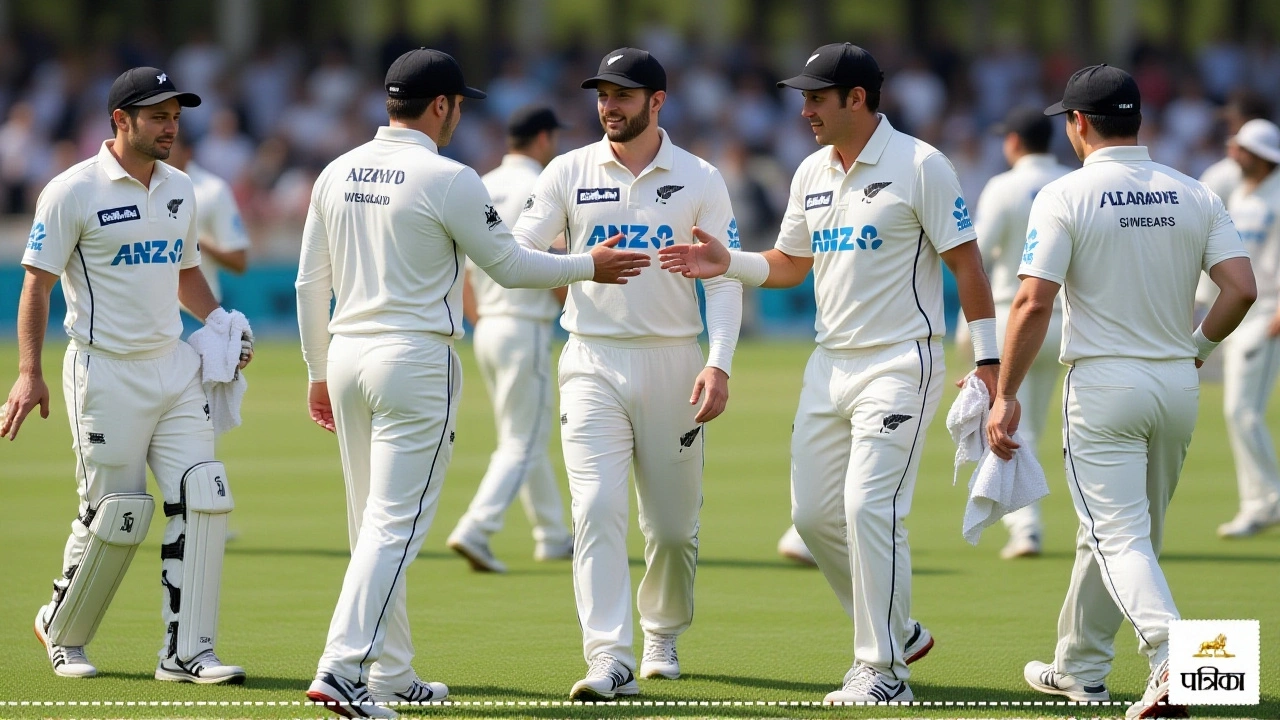
Visuals from the dressing room showed Henry, helmet in hand, eyes red, being hugged by teammates. Glenn Phillips placed a hand on his back. Kane Williamson whispered something that made Henry nod slowly. This wasn’t just about missing a game. It was about missing the culmination of a career defined by resilience.
Who Steps In? Nathan Smith’s Moment
Replacing Henry isn’t like swapping a tire. He’s not just a bowler — he’s a pressure performer. His five for 42 against India in the group stage, at the very same Dubai International Cricket Stadium, had been the blueprint for how to dismantle their top order. His ability to swing the ball both ways at 135+ km/h, especially with the new ball, made him India’s nightmare.
Enter Nathan Smith, the all-rounder who’d played only once before in the tournament — against Pakistan in the opener. Smith, 28, is a gritty lower-order bat and a medium-pacer with decent control but lacks Henry’s lethal pace and swing. Head coach Gary Stead admitted the decision was painful: "We’ve got guys who can fill in. But Matt’s been our x-factor. That’s the reality."
Alternative options like Jacob Duffy, who had played in the pre-tournament tri-series but not the main event, were considered. But the selectors opted for Smith’s versatility — he can bat at 7, bowl 4 overs, and hold a catch. Still, the imbalance is stark. New Zealand’s pace attack now features Kyle Jamieson, William O’Rourke, and Smith — none of whom have taken more than three wickets in the tournament. Henry’s 10 wickets alone account for nearly a third of New Zealand’s total.
Why This Matters: India’s Batting, and the Ghost of 2019
India’s batting lineup — Rohit Sharma, Virat Kohli, KL Rahul — has been in sublime form. They’ve averaged 340 in their last three games. And they’ve seen Henry’s bowling up close. He dismissed Rohit in the group stage, had Kohli caught behind in the 12th over, and bowled Rahul with a searing in-swinger. Without him, India’s top order will breathe easier.
Former New Zealand fast bowler Simon Doull summed it up bluntly on air: "This is a massive blow. Henry was their only bowler who could consistently break partnerships. India’s got the depth to exploit this. Without him, New Zealand’s got to hope their spinners and fielding turn the tide — and that’s a tall order."
There’s also the emotional weight. Henry was part of New Zealand’s 2015 and 2019 World Cup finals — both losses. In 2019, he took the wickets of David Warner and Michael Clarke in the final at Lord’s. Now, just when he was on the cusp of redemption, injury steals his spotlight. "He’s played through pain before," said Santner. "But this… this one hurts different."
What’s Next? The Final, and Beyond
New Zealand’s best hope now lies in Mitchell Santner’s spin and the fielding brilliance of Rachin Ravindra and Daryl Mitchell. But India’s mystery spinner Varun Chakravarthy, who took five wickets against Australia in the semis, could be the difference-maker. Santner admitted they’ve studied his arm ball obsessively. "We know what he’s got," he said. "But knowing and playing it? That’s another thing."
The crowd in Dubai — estimated at 25,000, mostly Indian fans — erupted in cheers when Henry’s absence was announced. The noise was deafening. For New Zealand, it’s a reminder of how close they came — and how cruel sport can be.
Henry’s Legacy: More Than Just Wickets
Even in defeat, Henry’s impact endures. He holds the record for the highest 9th-wicket partnership in New Zealand ODI history — 84 runs with Jimmy Neesham against India in 2016. He was the unsung hero of Somerset’s 2024 T20 Blast title win, taking the final wicket to seal their first trophy in 19 years. He’s re-signed with Somerset through July 2025, proving his hunger remains. But this tournament? This final? This was his moment.
He didn’t play. But he was there — in every delivery he bowled against India, in every catch he took, in every tear shed on the sidelines. New Zealand’s journey may end without silverware. But Matt Henry’s courage? That’s already won something bigger.
Frequently Asked Questions
How will New Zealand’s bowling attack change without Matt Henry in the final?
Without Henry, New Zealand loses their most potent fast-bowling threat, reducing their pace attack to Kyle Jamieson, William O’Rourke, and all-rounder Nathan Smith. Henry accounted for 10 of the team’s 32 tournament wickets — nearly 31%. Smith, while reliable, lacks Henry’s pace and swing, making it harder to break India’s top order early. The team will lean heavier on Mitchell Santner’s spin and fielding to compensate.
Why was Nathan Smith chosen over Jacob Duffy as Henry’s replacement?
Though Jacob Duffy had stronger bowling figures in the pre-tournament tri-series, the selectors chose Nathan Smith for his all-round utility. Smith can bat at No. 7, bowl four overs, and contribute in the field — offering balance in a high-pressure final. Duffy, while quicker, hadn’t played any of New Zealand’s four tournament matches and was seen as a risk with less match familiarity under pressure.
What impact did Matt Henry have on India during the group stage?
In their group stage match on March 2, 2025, Henry dismantled India’s top order, taking 5 for 42 in eight overs at the Dubai International Cricket Stadium. He dismissed Rohit Sharma, Virat Kohli, and KL Rahul, with an economy rate of 5.25. His ability to swing the ball both ways unsettled India’s batters — a threat now gone in the final.
Has Matt Henry missed major finals due to injury before?
No — this is the first time Henry has been ruled out of a major ICC final due to injury. He was part of New Zealand’s 2015 and 2019 World Cup squads, playing key roles in both finals, including taking the wickets of David Warner and Michael Clarke in the 2019 final. His consistency through injuries — including a prior shoulder issue in 2021 — made his absence in 2025 especially shocking.
What does Henry’s absence mean for New Zealand’s future campaigns?
Henry, at 33, is entering the twilight of his career. His injury raises concerns about his availability for the 2027 Cricket World Cup. New Zealand must now accelerate the development of younger pacers like Ben Sears and Hamish Bennett. His leadership and experience — both on and off the field — will be deeply missed, regardless of the final’s outcome.
How did fans react to Henry’s injury news?
Indian fans in Dubai erupted in loud cheers upon hearing Henry wouldn’t play — a rare show of celebration for an opponent’s misfortune. New Zealand supporters, meanwhile, were somber. Social media trended with #HenryStrong and #ThankYouMattHenry, with tributes pouring in from players worldwide, including Virat Kohli, who posted a photo of Henry’s 5-for from the group stage with the caption: "Respect."
 Cricket